Many runners wonder how fast they're actually running and what that means for their training. Your average speed provides insight into your pace, endurance, and recovery capacity. In this blog post, you'll learn how to easily calculate your speed, how to interpret the results, and how you can use them to train smarter.
How often and how long to train?
A common question is how often and how long a workout should be to get reliable speed data. Ideally, you should run two to three times a week to collect sufficient data and have enough rest periods. Too little or too chaotic training often leads to inaccurate measurements or even injuries. Good workouts are consistent, preferably at fixed times, and last for, say, 20 to 30 minutes so you can maintain a steady pace.
If you want to know what the ideal training frequency is for your level, read our blogHow often to run per weekfor clear and practical guidelines.
Tempo vs. Speed: What's the Difference?
In running, you'll often encounter two terms: pace (minutes per kilometer) and speed (kilometers per hour). Pace indicates how long it takes you to cover one kilometer. Speed indicates how many kilometers you would cover in one hour. For example, if you run 5 kilometers in 30 minutes, your pace is 6 minutes per kilometer, which equates to 10 km/h. Understanding both terms helps you better measure and compare your performance.
How do you calculate your speed or pace?
Calculating it is simple: record the distance traveled in kilometers and the time in minutes. Then use the formula:
Speed (km/h) = distance ÷ time in hours
Pace (min/km) = time in minutes ÷ distance Suppose you run 8 kilometers in 40 minutes. Your pace is 5 minutes per kilometer, or 12 km/h. Online calculators make this even easier, so you can see results immediately.
When can you use which value?
You often use speed when planning training and races: think of interval training or endurance zones. Pace is more concise for everyday use: you immediately see how many minutes you run per kilometer. For short races, such as 5K, pace is useful; for longer distances like a half marathon or marathon, speed is useful for overall planning. Choose the unit that best suits your goal and training type.
How do you interpret your average speed?
Speed is just a number; what matters more is what it means to you. Don't blindly compare yourself to others, because factors like age, environment, or experience play a significant role. Think of it as a snapshot: last week you were 10 km/h, for example, this week maybe 10.5 km/h. That sounds small, but it's progress. Use your speed as a benchmark and focus on your own growth.
Tools and handy calculator that help
There are many handy online tools that automatically convert distance and time into pace or speed. For example, calculators that display both km/h and min/km based on your input. These tools are especially useful for quickly gaining insight without having to use complicated formulas yourself.
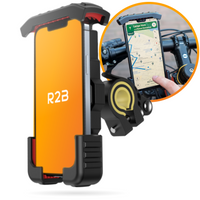
With arunning phone holder,you can safely carry your phone with you to check your measurements instantly. This makes tracking easier, more logical, and helps you keep track of your pace.