No Products in the Cart
To properly adjust your bike, start with the correct saddle height: sit on the saddle and place your heel on the pedal in the lowest position. Your leg should be almost fully extended; with your foot resting normally on the pedal, your knee should bend slightly. Then, slide the saddle slightly forward or backward so that your kneecap is directly over the pedal axle when the pedals are horizontal. Next, adjust your handlebars so that you have an upright and relaxed position on a city bike or e-bike, or a slightly lower, aerodynamic position on sporty bikes. Finally, check that your feet are centered on the pedals. With this foundation, you'll always have the correct riding position and enjoy greater comfort and cycling pleasure.
Want to delve deeper? In our blog post, "Adjusting the Saddle," we explain step-by-step how to properly adjust your bike saddle. Want to know how to do it yourself and what the differences are for each type of bike? Then read on for practical tips and examples.
Finding the right saddle height is perhaps the most important part of your setup:
Too low – you make short pedaling movements, which puts extra strain on your knee and bottom bracket.
Too high – your hips move with each kick, which can lead to back problems or a stiff neck.
Correct position – sit on your bike saddle with your heel on the pedal in the lowest position. Your leg should be almost fully extended. When you place your foot down normally, your knee should be slightly bent.
This method helps you easily and accurately find the ideal saddle height. Remember that frame size also plays a role: a bike that's too big or too small makes it harder to determine the correct position.
Not only the height, but also the forward or backward movement of your saddle has a significant impact. If the saddle is too far forward, you'll put too much pressure on your knees. If it's too far back, you'll lose pedaling power and tire more quickly. The goal is a natural position where your legs move in the correct position and your knees don't turn inward or outward.
The best way to check this is to place the pedals horizontally. Look down from your kneecap: the line should be directly above the pedal axle. If the line isn't aligned correctly, you'll need to adjust your saddle until the position is perfect. This is often done with two bolts under the saddle that allow you to adjust it.
The height of your handlebars largely determines your seating position:
High handlebars – comfortably upright and with a good overview, ideal for city bikes and e-bikes.
Low handlebars – Sporty bikes such as road bikes and mountain bikes require a lower position for an aerodynamic position and better performance.
How to adjust it : Keep your back straight and your shoulders relaxed. Always check that the handlebars are secure and properly adjusted.
Straight handlebars or a different type of handlebar can also have an effect. On a racing bike, a slightly lower stem increases speed, while on city bikes, a higher stem is more comfortable.
Make sure your feet are centered on the pedals. Incorrect positioning can cause knee problems. When checking your pedals, position them horizontally and check that your knees are aligned directly above your feet. With clipless pedals, it's important to ensure the adjustment is correct and that your knees don't twist inward or outward. This allows you to pedal powerfully and injury-free with every stroke.
Each type of bicycle requires its own adjustment:
City bikes – sit upright with the handlebars and saddle relatively high for a comfortable position.
Racing bike – saddle higher than the handlebars for a sporty riding position and more speed.
Mountain bike – often a slightly lower saddle for more control and maneuverability.
E-bike – stability and safety are paramount, with a handlebar height that inspires confidence at higher speeds.
General guidelines help you choose the right size, but ultimately it's how the bike fits that counts and whether you can make longer rides without any problems.
After every adjustment, check the bike's fit during a short test ride. If something doesn't feel right, adjust it immediately. Even small differences of a few millimeters in saddle height or handlebar position can have a significant impact. Always carry a multi-tool so you can make adjustments on the go. If you experience back, neck, or shoulder pain, you know the adjustment isn't quite right and there's still room for improvement.
A well-adjusted bike is the foundation, but you can further enhance your cycling enjoyment by paying extra attention to comfort. Consider a saddle that fits your sit bones, ergonomic grips, or pedals with a larger support surface. The right frame size and a well-chosen handlebar also contribute to a natural posture. This way, you'll not only enjoy better performance but also a comfortable position you can maintain for hours without any problems.
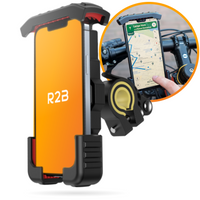
Properly adjusting a bike is the first step, but don't forget the accessories. A sturdy phone holder or a comfortable saddle will make your ride even more enjoyable. With the right combination of adjustments and accessories, you'll get the most out of your bike.